- লিঙ্ক পান
- X
- ইমেল
- অন্যান্য অ্যাপ
And
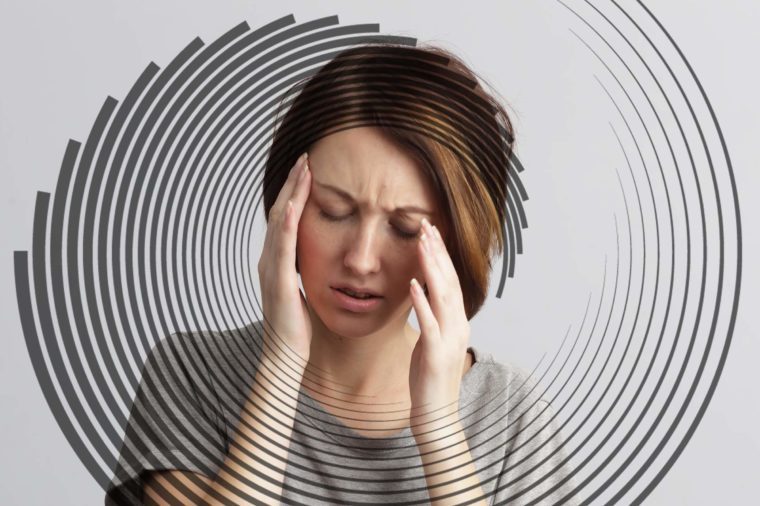 KOLDUNOV/SHUTTERSTOCKVertigo is the physical sensation that the world is spinning around you, or that you are spinning while the world stands still. "In addition to this dizzying sensation, you may have nausea or double vision as associated symptoms. Some people also have decreased hearing or ringing in their ears based on the cause of their vertigo," says neurologist Arif Dalvi, MD, MBA, of Palm Beach Neuroscience Institute. Here are eight medical conditions that could be making you dizzy.
 RETONCY/SHUTTERSTOCKUnless you're a diehard, extreme-rollercoaster fan, the thought of spinning and being dizzy for more than just a few seconds is scary. Unfortunately, many vertigo attacks last far longer than the average rollercoaster ride. "The duration of vertigo depends on the cause. With more benign causes it may last a few minutes, but other causes may have vertigo lasting for hours, days, or even weeks," says Dr. Dalvi. Accurately identifying the length of time your vertigo lasts is very important. This piece of information will help your doctor to determine its root cause.
 FIZKES/SHUTTERSTOCKVertigo can be a symptom of many different conditions. Some are more serious than others, but no matter what the cause, vertigo often resolves on its own or can be treated successfully. "Many of the diseases that cause vertigo affect the vestibular system. The vestibular system is a neuropathway in the inner ear, that senses motion, and is responsible for detecting the location of our body, relative to the objects around us. In certain medical conditions, an inappropriate, or false signal may be sent through the vestibular nerve onto other areas of the brain. When this occurs, the brain perceives the false signals as movement and we, in turn, experience vertigo," explains Derek Bennetsen, DO, an emergency physician at The Colony ER Hospital. It's important to find out the reason why you are experiencing vertigo. Treating this sole symptom will not be enough to cure many of its underlying causes.
 MEGAFLOPP/SHUTTERSTOCKMost diagnoses of vertigo fall into two categories—peripheral or central. All that means is that the source of trouble is in your inner ear (peripheral) or the problem is with your nervous system (central). There are several sub-categories of each, according to Upper Cervical Awareness, a vertigo patient group; peripheral vertigo is more common than central vertigo.
 LIA KOLTYRINA/SHUTTERSTOCKThis peripheral vertigo has quite the name: "Benign paroxysmal positional vertigo (BPPV), is the most common cause of vertigo," says Dr. Bennetsen. One possible trigger for BPPV is a calcium deposit in the inner ear—but often the source of trouble is unclear. BPPV can last for a few seconds or up to several minutes, and often recurs over the course of many months. The dizziness associated with BPPV can range from mild to extreme and is triggered by sudden head movements, such as nodding. "A person with BPPV feels vertigo while turning their head quickly, such as occurs when rolling over in bed. They may also have darting movements of the eyes, called nystagmus," adds Dr. Dalvi. Other movements which might trigger this form of vertigo include sitting up after reclining, lying down after sitting, and standing up.
 AGNIESZKA MARCINSKA/SHUTTERSTOCKMénière's disease is a disorder of the inner ear, which causes vertigo, ringing in the ears, and hearing loss. It is a chronic condition, with no cure, but patients can manage and reduce symptoms, according to Ian Swinburne, PhD, Harvard Medical School, a Hearing Health Foundation grantee who specializes in Ménière's disease. "Vertigo caused by Ménière's disease is likely brought on by episodes of inner ear malfunction. The cause of Meniere's disease is poorly understood, but several lines of evidence suggest that the internal environment of the ear becomes out of control. For the ear to normally sense our body's movement, it must maintain an environment within the organ such that specialized cells that detect our head's movement can function properly. Bouts of vertigo likely arise in patients with Meniere's disease, because the inner ear's tissue tears from too much fluid pressure—causing the ear's internal environment to become abnormal," he explains. Here's what else your ringing ears are trying to tell you.
 SASINTIPCHAI/SHUTTERSTOCKMal de debarquement, which translates into sickness of disembarkment, causes vertigo in people who have spent time on boats. Some experts also believe this phenomenon can occur after driving or flying, although sea travel is the most common cause. "Leaving a cruise ship, and stepping onto dry land can cause someone to feel dizzy or off balance," explains Dr. Bennetsen. According to VEDA, a not-for-profit organization focused on vestibular disorders, mal de debarquement can even occur when someone gets out of a waterbed. "This form of vertigo is typically short-lasting, but like all vertigo, can cause an unsettling, scary feeling," adds Dr. Bennetsen. Here are 11 smart tricks for not getting sick on a cruise.
 NAMTIPSTUDIO/SHUTTERSTOCKSince peripheral vertigo is caused by malfunctions within the inner ear, it should come as no surprise that ear infections may cause vertigo. "Infections of the inner ear can lead to a severe form of vertigo called acute labyrinthitis," says Dr. Dalvi. "Acute labyrinthitis is most commonly caused by a viral infection, such as herpes simplex. Other ear infections, such as otitis media, can also cause vertigo," he adds.
 SYDA PRODUCTIONS/SHUTTERSTOCKThis condition impacts upon the vestibulocochlear nerve, located within the inner ear. When this nerve becomes inflamed, it inhibits the ability of the brain to accurately process information about the head position and balance. This causes severe, extreme peripheral vertigo and other symptoms such as difficulty concentrating. According to Cleveland Clinic, vestibular neuronitis may be caused by viral infections such as shingles, herpes simplex, measles, polio, hepatitis, flu, chicken pox, and the mumps.
 WAYHOME STUDIO/SHUTTERSTOCKThere is very little that stress can't make worse—including vertigo. "The question about stress causing vertigo is an interesting one. People have examined this for some time, and the answer is, 'it depends,'" says Rick Pescatore, DO, of the Department of Emergency Medicine for the Inspira Health Network. "The best evidence we have suggests that vertigo is likely aggravated by stress, but only certain types of vertigo, particularly BPPV, and possibly vestibular neuronitis. On the flipside, it is much more likely that stress is a consequence of, and not a cause of, Ménière's disease. So, to sum that up, while there is certainly a relationship between vertigo and stress, there is likely a strong 'chicken and egg' component," he adds. Here are 37 ways to make managing stress much easier.
 LEUNGCHOPAN/SHUTTERSTOCKViral meningitis is an inflammation of the membranes surrounding the spinal cord and the brain. The signs include flu-like symptoms, a stiff neck, and often the worst headache you could imagine. "Meningitis may also lead to vertigo in some cases," says Dr. Dalvi. This form of vertigo is classified as central vertigo since it is generated from a condition affecting the central nervous system.
 SYDA PRODUCTIONS/SHUTTERSTOCKAnother cause of central vertigo is stroke. "Fortunately, vertigo caused by stroke is pretty rare and usually only expected in older patients," says Dr. Pescatore. "Central causes of vertigo tend to be less benign and include stroke in the back of the brain. This is called a posterior circulation stroke," explains Dr. Dalvi. According to Harvard Health, you can reduce your risk of stroke by not smoking cigarettes, losing weight if you need to, exercising more, and drinking alcohol less.
 WAYHOME STUDIO/SHUTTERSTOCK"Some patients with migraine may have a complicated migraine that presents with vertigo as well," says Dr. Dalvi. This type of migraine is called MAV (migraine-associated vertigo). According to VEDA, MAV turns up in approximately 40 percent of migraine patients at least once. In addition to the often-debilitating symptoms of migraine headaches, vestibular migraines include vertigo, dizziness, and loss of balance as symptoms. There may be a new way to treat migraines in women, according to a new study.
 SANTYPAN/SHUTTERSTOCK"Unfortunately, most of the causes of vertigo are out of our control," explains Dr. Bennetsen. "However, vertigo may be induced or modified by stress, changes in barometric pressure, dehydration, and even sleep deprivation." Alleviating stress through meditation or yoga may help you to avoid vertigo in some cases. Making sure you stay hydrated and rested may also help. "From a dietary standpoint, it is important to avoid alcohol, foods high in salt, and excessive caffeine, as any of these can make your symptoms worse. In the case of Ménière's disease, caffeine may lead to more intense tinnitus—ringing in the ear," he adds.
 ANDREY_POPOV/SHUTTERSTOCKWhen vertigo strikes, try to find a place you can be still and rest. "For severe vertigo, bed rest may be required until the acute episode subsides," says Dr. Dalvi. He also cautions that trying to walk during a severe episode of vertigo can easily lead to a bad fall. "Limit your changes in position, as much as possible. Decreasing excessive neurologic stimuli, such as excessive light and sound, are of benefit as well," adds Dr. Bennetsen. "Certain medications can help alleviate the symptoms of vertigo. Meclizine (Antivert), an antihistamine, is commonly used," he adds. Check out these ten home remedies for dizziness.
11 Signs Your Upper Back
Pain Is Serious Trouble »BY JESSICA
MIGALA
 SEBRA/SHUTTERSTOCKSlouch much? "Upper back pain is most commonly from poor posture," says Irene Tien, MD, emergency medicine physician with the Rowe Telemedicine Network. Sitting and staring at a computer "shortens chest muscles and pulls on the muscles in the upper back. A lot of people get a muscle spasm between the shoulder blades as a result," she explains. Here's how to help your body recover from sitting all day long.
 PETER BERNIK/SHUTTERSTOCKAlong with sub-par posture, strain in the muscles around the neck and shoulders or between the shoulder blades can be multi-factorial, says Kaliq Chang, MD, an interventional pain management specialist at the Atlantic Spine Center in West Orange, New Jersey. Most notably: stress, strenuous exercise, and sleeping with your neck in a weird position.
 AFRICA STUDIO/SHUTTERSTOCKOften you can stay home: There are many effective home remedies for upper back pain relief. "A typical episode of muscle strain usually lasts only a few days," explains Dr. Chang. Staying comfortable during this time is key. He suggests resting, icing, and taking anti-inflammatory medications like ibuprofen or naproxen.
 ESB PROFESSIONAL/SHUTTERSTOCKYou can't always assume the discomfort is no big deal. "If pain lingers for more than a few days or requires regular pain medications," you should be evaluated by your physician, says Leda Ghannad, MD, assistant professor of orthopedic surgery and physical medicine and rehabilitation at Rush University Medical Center. Another sign: if the pain limits your abilities in your day-to-day life, like you have to call off work to stay in bed. Following are signs you need to get medical help, pronto.
 DMYTRO ZINKEVYCH/SHUTTERSTOCKYou've tried the DIY treatments, gotten massages, and maybe even bought a new mattress. If your upper back is persistently hurting, it may—very rarely—be a sign of a lung tumor. (Check out these symptoms of lung cancer that are easy to ignore.) The American Cancer Society points out that advanced lung cancer may contribute to bone pain. Weight loss, chest pain, and weakness are also signs of lung cancer.
 DMITRY KALINOVSKY/ SHUTTERSTOCKIf you're able to walk away from a rear end crash and feel OK, you may decide not to get checked out by a doctor. However, whiplash—a violent backward-and-forward jerk of the head—can create "tears and inflammation of the muscles and ligaments in the neck and upper back," explains Dr. Chang. See your doctor if you suspect whiplash, especially if you have other symptoms like fatigue, dizziness, and pain in your neck.
 AFRICA STUDIO/SHUTTERSTOCKAnyone who's had a kidney stone knows they're quite agonizing—and they may cause upper back pain, says Dr. Ghannad. It's unlikely that this is the only symptom you'll notice though. You may also feel severe pain in your side and back below your ribs, the Mayo Clinic notes. Discomfort while peeing or red- or brown-hued urine may be other clues. The best advice? "If pain is severe and persistent, it's a good idea to be evaluated by a physician," says Ghannad.
 SYDA PRODUCTIONS/ SHUTTERSTOCKThe flu may be going around—but this isn't any old illness. In certain instances, severe back pain with an accompanying fever or numbness or tingling in your arms can be from a spinal infection, points out Dr. Tien. Some risk factors are if you're immunosuppressed, have cancer or diabetes, or are obese. If your doc thinks you may have a spinal infection, they may order an X-rays, CT, or MRI scan to help make the diagnosis. Antibiotic or antifungal medications can treat the issue.
 NOOR HASWAN NOOR AZMAN/SHUTTERSTOCKNumbness or weakness in your arms can be one sign of a stroke—or it may also be an indication of a tear in the wall of the aorta, the largest blood vessel in your body that runs in the back of your chest, says Dr. Tien. She adds that you're especially at risk if you have uncontrolled high blood pressure over a long period of time. (Find out doctor-recommended tips for reducing your blood pressure.) "This can cause a tearing mid-chest and/or back pain," she describes. Just like a stroke, this is an emergency that requires immediate medical care.
 MICHAELHEIM/SHUTTERSTOCKThe myth of the heart attack victim clutching their chest and collapsing has long been busted. It pays to listen up to subtler signs like nausea, shortness of breath, extreme fatigue, and back pain, says Dr. Tien. If you think you're having a heart attack, here's exactly what you should do.
 MARIDAV/SHUTTERSTOCKIt's time to think about a possible slipped disc (also called a herniated disc), which can happen if you lift something heavyusing your back instead of your legs. If you feel upper back pain along with numbness or weakness in your arms or legs, it may be a sign of a neurologic injury from a slipped disc, says Dr. Chang. Your doc can make the diagnosis with a physical exam.
 BANANA OIL/SHUTTERSTOCKOne potential cause of back pain is a condition called costochondritis, an inflammation of the cartilage connecting your ribs to your breastbone. While lifting heavy items, respiratory infections, and chest injuries can cause it, often the source of the pain is unclear. You may feel pain that travels from your chest to your back. Definitely get checked out by your doctor, it often goes away without any treatment.
 BURIBURI/SHUTTERSTOCKTake a deep breath: how does that feel? If "extremely painful" is your answer, get checked out. One emergency-worthy cause is a pulmonary embolism, says Dr. Tien. "Blood clots can break off from a deep vein in the leg or arm and travel to the lung, wedging in blood vessels, causing poor blood flow, inflammation, and death of lung tissue," she explains. If your back pain gets worse with a deep breath, you're short of breath, you're coughing up blood, or you feel faint, call 911.
 PIXELHEADPHOTO DIGITALSKILLET/SHUTTERSTOCKRarely, upper back pain may be due to a punctured lung, which can be caused by an injury. While it is less likely to be the cause of your discomfort, a punctured lung is something you need to know the signs of so you can take the right action. "If the pain is accompanied by shortness of breath or severe pain taking a deep breath, seek urgent medical care," advises Dr. Chang.
 WAYHOME STUDIO/SHUTTERSTOCKYou had a recent fall, but you didn't think your back would hurt this much! "If you had a traumatic injury, like a heavy object lands on your back or you slip on the ice and fall with your back striking the edge of a step, you can break a vertebral bone or a rib," notes Dr. Tien. (Depending on where you broke it you may feel upper left back pain, or it may appear on your right side.) The pain can be moderate to severe, but it will get worse when you move. Talk to your doctor, especially after any bad injury.
11 Signs Your Upper Back Pain Is Serious Trouble ; JESSICA MIGALA
What Causes Vertigo? 15 Things Neurologists Wish You Knew
BY COREY WHELAN
The spinning, dizzying loss of balance which earmarks vertigo can come without warning. Here's what medical experts wished you knew.
What does vertigo feel like?
KOLDUNOV/SHUTTERSTOCKVertigo is the physical sensation that the world is spinning around you, or that you are spinning while the world stands still. "In addition to this dizzying sensation, you may have nausea or double vision as associated symptoms. Some people also have decreased hearing or ringing in their ears based on the cause of their vertigo," says neurologist Arif Dalvi, MD, MBA, of Palm Beach Neuroscience Institute. Here are eight medical conditions that could be making you dizzy.How long does vertigo last?
RETONCY/SHUTTERSTOCKUnless you're a diehard, extreme-rollercoaster fan, the thought of spinning and being dizzy for more than just a few seconds is scary. Unfortunately, many vertigo attacks last far longer than the average rollercoaster ride. "The duration of vertigo depends on the cause. With more benign causes it may last a few minutes, but other causes may have vertigo lasting for hours, days, or even weeks," says Dr. Dalvi. Accurately identifying the length of time your vertigo lasts is very important. This piece of information will help your doctor to determine its root cause.Vertigo is a symptom, not a stand-alone disease
FIZKES/SHUTTERSTOCKVertigo can be a symptom of many different conditions. Some are more serious than others, but no matter what the cause, vertigo often resolves on its own or can be treated successfully. "Many of the diseases that cause vertigo affect the vestibular system. The vestibular system is a neuropathway in the inner ear, that senses motion, and is responsible for detecting the location of our body, relative to the objects around us. In certain medical conditions, an inappropriate, or false signal may be sent through the vestibular nerve onto other areas of the brain. When this occurs, the brain perceives the false signals as movement and we, in turn, experience vertigo," explains Derek Bennetsen, DO, an emergency physician at The Colony ER Hospital. It's important to find out the reason why you are experiencing vertigo. Treating this sole symptom will not be enough to cure many of its underlying causes.What type of vertigo is it?
MEGAFLOPP/SHUTTERSTOCKMost diagnoses of vertigo fall into two categories—peripheral or central. All that means is that the source of trouble is in your inner ear (peripheral) or the problem is with your nervous system (central). There are several sub-categories of each, according to Upper Cervical Awareness, a vertigo patient group; peripheral vertigo is more common than central vertigo.What causes vertigo when lying down?
LIA KOLTYRINA/SHUTTERSTOCKThis peripheral vertigo has quite the name: "Benign paroxysmal positional vertigo (BPPV), is the most common cause of vertigo," says Dr. Bennetsen. One possible trigger for BPPV is a calcium deposit in the inner ear—but often the source of trouble is unclear. BPPV can last for a few seconds or up to several minutes, and often recurs over the course of many months. The dizziness associated with BPPV can range from mild to extreme and is triggered by sudden head movements, such as nodding. "A person with BPPV feels vertigo while turning their head quickly, such as occurs when rolling over in bed. They may also have darting movements of the eyes, called nystagmus," adds Dr. Dalvi. Other movements which might trigger this form of vertigo include sitting up after reclining, lying down after sitting, and standing up.
According to the Mayo Clinic, women get BPPV more than men and people of both genders over age 50 are more likely to get it than their younger counterparts. However, BPPV can occur to anyone.
Ménière's disease and vertigo
AGNIESZKA MARCINSKA/SHUTTERSTOCKMénière's disease is a disorder of the inner ear, which causes vertigo, ringing in the ears, and hearing loss. It is a chronic condition, with no cure, but patients can manage and reduce symptoms, according to Ian Swinburne, PhD, Harvard Medical School, a Hearing Health Foundation grantee who specializes in Ménière's disease. "Vertigo caused by Ménière's disease is likely brought on by episodes of inner ear malfunction. The cause of Meniere's disease is poorly understood, but several lines of evidence suggest that the internal environment of the ear becomes out of control. For the ear to normally sense our body's movement, it must maintain an environment within the organ such that specialized cells that detect our head's movement can function properly. Bouts of vertigo likely arise in patients with Meniere's disease, because the inner ear's tissue tears from too much fluid pressure—causing the ear's internal environment to become abnormal," he explains. Here's what else your ringing ears are trying to tell you.Sailors, beware
SASINTIPCHAI/SHUTTERSTOCKMal de debarquement, which translates into sickness of disembarkment, causes vertigo in people who have spent time on boats. Some experts also believe this phenomenon can occur after driving or flying, although sea travel is the most common cause. "Leaving a cruise ship, and stepping onto dry land can cause someone to feel dizzy or off balance," explains Dr. Bennetsen. According to VEDA, a not-for-profit organization focused on vestibular disorders, mal de debarquement can even occur when someone gets out of a waterbed. "This form of vertigo is typically short-lasting, but like all vertigo, can cause an unsettling, scary feeling," adds Dr. Bennetsen. Here are 11 smart tricks for not getting sick on a cruise.Acute labyrinthitis and vertigo
NAMTIPSTUDIO/SHUTTERSTOCKSince peripheral vertigo is caused by malfunctions within the inner ear, it should come as no surprise that ear infections may cause vertigo. "Infections of the inner ear can lead to a severe form of vertigo called acute labyrinthitis," says Dr. Dalvi. "Acute labyrinthitis is most commonly caused by a viral infection, such as herpes simplex. Other ear infections, such as otitis media, can also cause vertigo," he adds.Vestibular neuronitis and vertigo
SYDA PRODUCTIONS/SHUTTERSTOCKThis condition impacts upon the vestibulocochlear nerve, located within the inner ear. When this nerve becomes inflamed, it inhibits the ability of the brain to accurately process information about the head position and balance. This causes severe, extreme peripheral vertigo and other symptoms such as difficulty concentrating. According to Cleveland Clinic, vestibular neuronitis may be caused by viral infections such as shingles, herpes simplex, measles, polio, hepatitis, flu, chicken pox, and the mumps.This just in—stress isn't good for anything, including vertigo (shocker)
WAYHOME STUDIO/SHUTTERSTOCKThere is very little that stress can't make worse—including vertigo. "The question about stress causing vertigo is an interesting one. People have examined this for some time, and the answer is, 'it depends,'" says Rick Pescatore, DO, of the Department of Emergency Medicine for the Inspira Health Network. "The best evidence we have suggests that vertigo is likely aggravated by stress, but only certain types of vertigo, particularly BPPV, and possibly vestibular neuronitis. On the flipside, it is much more likely that stress is a consequence of, and not a cause of, Ménière's disease. So, to sum that up, while there is certainly a relationship between vertigo and stress, there is likely a strong 'chicken and egg' component," he adds. Here are 37 ways to make managing stress much easier.Viral meningitis and vertigo—a little-known symptom
LEUNGCHOPAN/SHUTTERSTOCKViral meningitis is an inflammation of the membranes surrounding the spinal cord and the brain. The signs include flu-like symptoms, a stiff neck, and often the worst headache you could imagine. "Meningitis may also lead to vertigo in some cases," says Dr. Dalvi. This form of vertigo is classified as central vertigo since it is generated from a condition affecting the central nervous system.Stroke and vertigo
SYDA PRODUCTIONS/SHUTTERSTOCKAnother cause of central vertigo is stroke. "Fortunately, vertigo caused by stroke is pretty rare and usually only expected in older patients," says Dr. Pescatore. "Central causes of vertigo tend to be less benign and include stroke in the back of the brain. This is called a posterior circulation stroke," explains Dr. Dalvi. According to Harvard Health, you can reduce your risk of stroke by not smoking cigarettes, losing weight if you need to, exercising more, and drinking alcohol less.Vestibular migraine and vertigo
WAYHOME STUDIO/SHUTTERSTOCK"Some patients with migraine may have a complicated migraine that presents with vertigo as well," says Dr. Dalvi. This type of migraine is called MAV (migraine-associated vertigo). According to VEDA, MAV turns up in approximately 40 percent of migraine patients at least once. In addition to the often-debilitating symptoms of migraine headaches, vestibular migraines include vertigo, dizziness, and loss of balance as symptoms. There may be a new way to treat migraines in women, according to a new study.Habits that may make vertigo worse
SANTYPAN/SHUTTERSTOCK"Unfortunately, most of the causes of vertigo are out of our control," explains Dr. Bennetsen. "However, vertigo may be induced or modified by stress, changes in barometric pressure, dehydration, and even sleep deprivation." Alleviating stress through meditation or yoga may help you to avoid vertigo in some cases. Making sure you stay hydrated and rested may also help. "From a dietary standpoint, it is important to avoid alcohol, foods high in salt, and excessive caffeine, as any of these can make your symptoms worse. In the case of Ménière's disease, caffeine may lead to more intense tinnitus—ringing in the ear," he adds.Dealing with vertigo
ANDREY_POPOV/SHUTTERSTOCKWhen vertigo strikes, try to find a place you can be still and rest. "For severe vertigo, bed rest may be required until the acute episode subsides," says Dr. Dalvi. He also cautions that trying to walk during a severe episode of vertigo can easily lead to a bad fall. "Limit your changes in position, as much as possible. Decreasing excessive neurologic stimuli, such as excessive light and sound, are of benefit as well," adds Dr. Bennetsen. "Certain medications can help alleviate the symptoms of vertigo. Meclizine (Antivert), an antihistamine, is commonly used," he adds. Check out these ten home remedies for dizziness.
11 Signs Your Upper Back
Pain Is Serious Trouble »BY JESSICA
MIGALA
11 Signs Your Upper Back Pain Is Serious Trouble
Backaches can be an annoyance—or they can sideline you for days. Here's how to sort out if your upper back pain is run-of-the-mill or an emergency.
It may be your desk job
SEBRA/SHUTTERSTOCKSlouch much? "Upper back pain is most commonly from poor posture," says Irene Tien, MD, emergency medicine physician with the Rowe Telemedicine Network. Sitting and staring at a computer "shortens chest muscles and pulls on the muscles in the upper back. A lot of people get a muscle spasm between the shoulder blades as a result," she explains. Here's how to help your body recover from sitting all day long.It could also be stress
PETER BERNIK/SHUTTERSTOCKAlong with sub-par posture, strain in the muscles around the neck and shoulders or between the shoulder blades can be multi-factorial, says Kaliq Chang, MD, an interventional pain management specialist at the Atlantic Spine Center in West Orange, New Jersey. Most notably: stress, strenuous exercise, and sleeping with your neck in a weird position.What you can do
AFRICA STUDIO/SHUTTERSTOCKOften you can stay home: There are many effective home remedies for upper back pain relief. "A typical episode of muscle strain usually lasts only a few days," explains Dr. Chang. Staying comfortable during this time is key. He suggests resting, icing, and taking anti-inflammatory medications like ibuprofen or naproxen.When to go to the doctor
ESB PROFESSIONAL/SHUTTERSTOCKYou can't always assume the discomfort is no big deal. "If pain lingers for more than a few days or requires regular pain medications," you should be evaluated by your physician, says Leda Ghannad, MD, assistant professor of orthopedic surgery and physical medicine and rehabilitation at Rush University Medical Center. Another sign: if the pain limits your abilities in your day-to-day life, like you have to call off work to stay in bed. Following are signs you need to get medical help, pronto.The ache won't go away
DMYTRO ZINKEVYCH/SHUTTERSTOCKYou've tried the DIY treatments, gotten massages, and maybe even bought a new mattress. If your upper back is persistently hurting, it may—very rarely—be a sign of a lung tumor. (Check out these symptoms of lung cancer that are easy to ignore.) The American Cancer Society points out that advanced lung cancer may contribute to bone pain. Weight loss, chest pain, and weakness are also signs of lung cancer.You were in a car accident
DMITRY KALINOVSKY/ SHUTTERSTOCKIf you're able to walk away from a rear end crash and feel OK, you may decide not to get checked out by a doctor. However, whiplash—a violent backward-and-forward jerk of the head—can create "tears and inflammation of the muscles and ligaments in the neck and upper back," explains Dr. Chang. See your doctor if you suspect whiplash, especially if you have other symptoms like fatigue, dizziness, and pain in your neck.You feel pain in the side, too
AFRICA STUDIO/SHUTTERSTOCKAnyone who's had a kidney stone knows they're quite agonizing—and they may cause upper back pain, says Dr. Ghannad. It's unlikely that this is the only symptom you'll notice though. You may also feel severe pain in your side and back below your ribs, the Mayo Clinic notes. Discomfort while peeing or red- or brown-hued urine may be other clues. The best advice? "If pain is severe and persistent, it's a good idea to be evaluated by a physician," says Ghannad.You have a fever
SYDA PRODUCTIONS/ SHUTTERSTOCKThe flu may be going around—but this isn't any old illness. In certain instances, severe back pain with an accompanying fever or numbness or tingling in your arms can be from a spinal infection, points out Dr. Tien. Some risk factors are if you're immunosuppressed, have cancer or diabetes, or are obese. If your doc thinks you may have a spinal infection, they may order an X-rays, CT, or MRI scan to help make the diagnosis. Antibiotic or antifungal medications can treat the issue.The pain is searing through your chest, too
NOOR HASWAN NOOR AZMAN/SHUTTERSTOCKNumbness or weakness in your arms can be one sign of a stroke—or it may also be an indication of a tear in the wall of the aorta, the largest blood vessel in your body that runs in the back of your chest, says Dr. Tien. She adds that you're especially at risk if you have uncontrolled high blood pressure over a long period of time. (Find out doctor-recommended tips for reducing your blood pressure.) "This can cause a tearing mid-chest and/or back pain," she describes. Just like a stroke, this is an emergency that requires immediate medical care.You're really fatigued
MICHAELHEIM/SHUTTERSTOCKThe myth of the heart attack victim clutching their chest and collapsing has long been busted. It pays to listen up to subtler signs like nausea, shortness of breath, extreme fatigue, and back pain, says Dr. Tien. If you think you're having a heart attack, here's exactly what you should do.Your legs are weak
MARIDAV/SHUTTERSTOCKIt's time to think about a possible slipped disc (also called a herniated disc), which can happen if you lift something heavyusing your back instead of your legs. If you feel upper back pain along with numbness or weakness in your arms or legs, it may be a sign of a neurologic injury from a slipped disc, says Dr. Chang. Your doc can make the diagnosis with a physical exam.Pain moves from your chest to your back
BANANA OIL/SHUTTERSTOCKOne potential cause of back pain is a condition called costochondritis, an inflammation of the cartilage connecting your ribs to your breastbone. While lifting heavy items, respiratory infections, and chest injuries can cause it, often the source of the pain is unclear. You may feel pain that travels from your chest to your back. Definitely get checked out by your doctor, it often goes away without any treatment.A deep breath hurts
BURIBURI/SHUTTERSTOCKTake a deep breath: how does that feel? If "extremely painful" is your answer, get checked out. One emergency-worthy cause is a pulmonary embolism, says Dr. Tien. "Blood clots can break off from a deep vein in the leg or arm and travel to the lung, wedging in blood vessels, causing poor blood flow, inflammation, and death of lung tissue," she explains. If your back pain gets worse with a deep breath, you're short of breath, you're coughing up blood, or you feel faint, call 911.You're short of breath
PIXELHEADPHOTO DIGITALSKILLET/SHUTTERSTOCKRarely, upper back pain may be due to a punctured lung, which can be caused by an injury. While it is less likely to be the cause of your discomfort, a punctured lung is something you need to know the signs of so you can take the right action. "If the pain is accompanied by shortness of breath or severe pain taking a deep breath, seek urgent medical care," advises Dr. Chang.Pain intensifies when you move
WAYHOME STUDIO/SHUTTERSTOCKYou had a recent fall, but you didn't think your back would hurt this much! "If you had a traumatic injury, like a heavy object lands on your back or you slip on the ice and fall with your back striking the edge of a step, you can break a vertebral bone or a rib," notes Dr. Tien. (Depending on where you broke it you may feel upper left back pain, or it may appear on your right side.) The pain can be moderate to severe, but it will get worse when you move. Talk to your doctor, especially after any bad injury.
Here are ten more reasons your back may hurt.
- লিঙ্ক পান
- X
- ইমেল
- অন্যান্য অ্যাপ
মন্তব্যসমূহ
একটি মন্তব্য পোস্ট করুন